

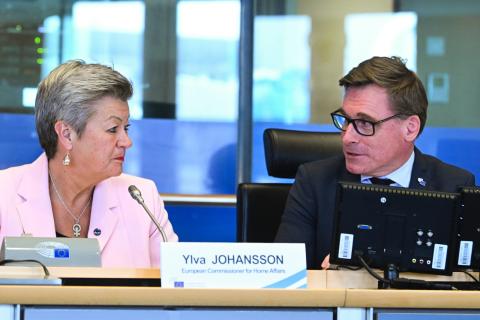
At its April plenary session, the European Economic and Social Committee (EESC) deliberated on the Talent Mobility Package, an all-encompassing initiative aimed at making the European Union more appealing to international talent and streamlining mobility within its borders.
Guest speaker Commissioner for Home Affairs Ylva Johansson emphasized the need for the EESC’s support in uniting Member States and civil society organizations to rally behind this groundbreaking endeavor. The cornerstone of the Talent Mobility Package, the “Talent Pool” initiative, marks the creation of the first EU-level voluntary matching pool for interested Member States to connect employers within the EU with job seekers from third countries.
Projections suggest that the Talent Pool initiative could yield a substantial positive impact on the EU’s GDP, with an estimated EUR 4.2 billion in additional wages and the participation of 20 Member States by 2030. However, the EESC underlined the necessity for the EU Talent Pool to be both user-friendly and credible, appealing to workers and employers while ensuring ethical and fair labor migration.
EESC President Oliver Röpke highlighted the pressing labor and skills shortages due to the shifting landscape towards a green and digital economy, as well as demographic challenges. The Talent Mobility Package is envisioned as a vital tool in addressing these issues, alongside upskilling and reskilling efforts and safeguarding workers and companies against exploitation and unfair competition.
The EESC aims to establish a comprehensive policy framework to tackle labor and skills shortages across Europe, perpetuated by numerous factors that have significantly impeded the operations of European companies, with 75% of SMEs reporting difficulties in finding skilled workers.
European Commissioner for Home Affairs Ylva Johansson underscored the call for a collective European approach to labor migration, emphasizing the need for collaborative efforts among EU institutions, Member States, and civil society organizations to introduce new initiatives and facilitate labor mobility policies.
Speaking on the critical issues of exploitation, fair wages, decent working conditions, and labor security, EESC member Tatjana Babrauskienė, rapporteur for the opinion, advocated for transparent and reliable information dissemination and called for a single EU website to provide comprehensive details for workers and employers seeking employment opportunities in EU Member States.
Elaborating on the facilitation of third-country nationals’ employment in the EU and their qualification validation, EESC member and co-rapporteur Mariya Mincheva emphasized the swift assessment and validation of their skills and competences to ensure their seamless integration into the workforce.
 Market Capital Research